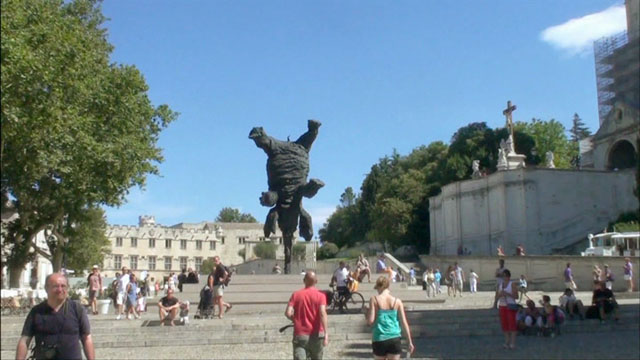
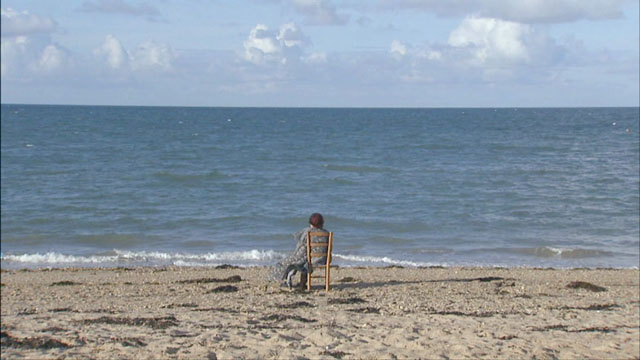
Beautiful Frenzy (2004), a 50-min doc on The Ex, which I put on while writing, hoping it’d be more full songs and concert footage than subtitled interviews in Dutch, but no such luck.

Jesus Lizard Sho(r)t (1996), ten minutes of not-great promo video followed by twenty-five of the good concert footage I’d desired from The Ex movie.

A little-known fact: Pixar reissued four of their recent films to theaters last month. Katy and I rewatched Up, which I’m ready to declare a masterpiece, and Wall-E (at which we were the only two people). I’d been looking forward to seeing that one again, and surely it’s wonderful, but its story and characters suffer in comparison to Up.

Movies watched on Rifftrax lately:

Island of Dr. Moreau: Crazypants, bonkers (“pants-crapping insane”) version of Island of Lost Souls. I was surprised that Brando dies so early, followed by Kilmer than Fairuza Balk. Our hero-by-default David Thewlis gets away.

Batman & Robin: It struck me just how expensive this movie looks. There’s a bit of CG fakery but it’s mostly money on the screen. Not that this excuses Schwartzenegger’s dialogue or Silverstone’s acting.

Jaws: Haven’t seen it since I was a kid, and maybe it’s the Rifftrax talking here, but I don’t think I like this movie one bit. Well, maybe ONE bit – the scene where Dreyfuss pretends to be tough by crushing his plastic cup.

Daredevil: fully deserving of the riff-treatment, a real stinking pile of unintentional humor. Things I can’t believe: that Colin Farrell played the villain, that this movie got a spin-off, and that the director was allowed to make another superhero movie (Ghost Rider).

Battlefield Earth: Barry Pepper can’t be to blame for this. Even though the movie is obviously horrible, he throws enough physical energy into his lead performance to somewhat transcend the muck. I haven’t seen Travolta in anything since, and hope I never do.

More Rifftrax: Terminator 3, Terminator 4, Jurassic Park (with Weird Al), X-Men and Transformers.

Rented Steve Coogan: Live ‘n Lewd (1994), which wasn’t the least bit funny.

Steve Coogan: The Man Who Thinks He’s It (1998) had the same characters, so I skipped a lot, but stopped for the Alan Partridge segment and all the bits with Simon Pegg.

Pegg with Julia Davies:

Rewatching The Wire with Katy. In the middle of season three now, where we’ve been stuck for a couple months.

Also checked out a good video essay by E. Lavik on the show’s style: strict chronological order without flashbacks, unobtrusive camerawork, no non-diegetic music or narration, with documentary-influenced camera moves (the camera shouldn’t know things that we don’t, like moving to the next speaker before they begin speaking). He spends time on subtle camera technique (lines, frames within frames, mirror shots and 180-degree rule: the usual stuff of visual analysis) and puts together a compelling argument that the show’s style is more interesting than it’s given credit for.

Also rewatched The Thick of It first season over a couple of days, to remember the characters before I see the next one.

And we finished Arrested Development season 2. I can hardly believe how good it is. I’m gonna have to watch the series over and over like Jeremy does.

“When I say the word Antwerp, you are going to have an effective dream about overpopulation.”

Opens with skinny Bruce Davison (xenophobic senator in X-Men, the original Willard) as George Orr, dreaming an atomic bomb. Takes himself into a psychotherapy clinic because he keeps having “effective” dreams which change reality – and history, so that nobody else remembers the original reality. Instead of focusing on the bomb, he tells them (via b/w flashback) how when he was a kid he kissed his Aunt Ethel, then out of embarrassment, wished her into the cornfield. No, he actually dreamed that she had never lived with him, and died far off in a car crash.

Orr’s case draws the attention of Dr. Haber (Kevin Conway, reminiscent of Oliver Reed), who hooks him up to dream-monitoring machines. It’s not clear if Haber can remember the shifting realities but he seems to believe in Orr’s effective dreams, and starts suggesting topics for him to dream about. He starts with just about the most dangerous subject you can suggest to someone with massive powers to alter reality: overpopulation.

Unsurprisingly, when Orr wakes up, there are considerably fewer people on earth thanks to the plague he dreamed up. Further experiments result in war with aliens, then peace with aliens (earth being colonized), all races being turned gray (no more racism!), not to mention Haber moving from a small office into the massive “Haber Institute”.

Not a bad alien, considering this was PBS’s first original movie:

Davison is nervous and unhappy for most of the movie, but adopts this carefree stance around the psychiatrist, making the exciteable Haber seem like the crazy one by proximity. And Davison turns out happier, hooks up with his lawyer (Margaret Avery, oscar-winning for The Color Purple) while Haber loses his mind trying to fix the world’s problems.

Haber with Avery:

Ursula says in interview that she was skeptical of the book’s filmic possibilities because “nothing happens in it”. On Haber: “He’s not evil. He means well all the way through the book. But he’s doing it wrong.” … “Of course this was a daoist book … Daoism says you do things by not doing things, and all attempt to do and to set things right and make things happen eventually backfires”

Remade with James Caan in the 2000’s. Not many of Le Guin’s stories have made it to the screen – just this and a couple recent adaptations of her dragons-and-sorcerors Earthsea stories. One of the screenwriters went on to create the celebrated hit series Murphy Brown; the other created Porky’s II. The co-directors had previously collaborated on a version of Vonnegut’s Between Time and Timbuktu.

Portlandia season 1 (2011)

Carrie Brownstein is funny! Who knew? Wonderful show, as long as it doesn’t interfere with Wild Flag. Highlights: anything involving mayor Kyle MacLachlan or the women’s bookstore (customers include Steve Buscemi, Aubrey Plaza and Heather Graham), housekeeper Aimee Mann and the opening theme song.

Delocated season 1 (2009)

Was prompted to watch this after hearing a Hanukkah recording in which Jon Glaser sings through a flat voice modulator. I didn’t get it. So now I do. Kinda low-key show with a single season-long story (not a sketch show) in which Jon and family are in witness protection and starring in a reality show about it. Eugene Mirman is assigned to find and murder Jon Glaser, and ends up with a reality show of his own. Mirman only manages to kill Paul Rudd in the first episode, Michael Shannon in the last, and some bystanders in between. Glaser’s relationship with his bodyguard Kevin Dorff seems more important to him than his own wife, so the marriage doesn’t last, but he meets a new girl when he opens a business where people can pay to smash things with a bat.

Steve Albini cameo:

Important Things With Demetri Martin season 1 (2009)

Things: timing, power, brains, chairs, safety, coolness, games.
Very simple-looking, but smart and hilarious show.
Jon Benjamin is a regular.

30 Rock season 5 (2010-11)

KableTown buys the network, Baldwin has a baby with Elizabeth Banks, Tina breaks up with Matt Damon, Kenneth leaves then returns, Tracy leaves then returns (and his wife gets a reality show), Jenna is in love with cross-dressing Will Forte, Will Arnett returns as Baldwin’s nemesis and Margaret Cho plays Kim Jong-Il.

It wasn’t as good as season 4.

Spaced season 1 (1999)

Watched this for the umpteenth time. Still great. The episode where their dog Colin is stolen was better than I remembered. Two episodes with strong Brian plots – one where they all go clubbing, and one featuring Brian’s ex-partner Vulva – are masterpieces.

Pegg & Frost are apparently in the new Tintin movie. Jessica Stevenson/Hynes (Daisy) I don’t see nearly often enough, but she was in Burke & Hare at least. Julia Deakin (landlady Marsha) is in Down Terrace and Hot Fuzz. Mark Heap (basement neighbor Brian) has been in twenty series I’ve never heard of (including Stressed Eric and How Do You Want Me, which sound good) plus Jam and Brass Eye and Big Train. Katy Carmichael (Twist) is not in a helluva lot, I’m afraid.

Plus appearances by Bill Bailey (at the comic shop), Peter Serafinowiz (Darth Maul, also in Look Around You and Running Wilde) and Michael Smiley (Kill List) as Pegg’s raver friend.

Screenwipe season 4 (2007)

Another blur of Screenwipe. This one covers lying in reality TV (and all TV), more on having a career in TV starting from the bottom, and some shows I can hardly believe exist like Street Doctor. Commentary on the credit-squeeze and the 24-hour news cycle. Last season surprised me with a mean Ken Russell joke – who was alive and well when the show aired, but had just died when I watched it – and this one followed up with an Amy Winehouse joke. Best of all, the show culminated with Charlie Brooker holding his own mock elimination competition meta-show.

2011 Wipe

After season five, the Screenwipe series went away but Brooker returns annually for a year-recap special. I watched the latest with Katy to expose her to the greatness of Brooker’s commentary in a slightly more relevant manner than watching old episodes of Screenwipe. She thought it was alright, but thought it’d be a half hour long so spent the latter half waiting for it to end. Arab Spring, Charlie Sheen, Rupert Murdoch (with an excellent Adam Curtis history segment), the London riots, and of course plenty of television. It’s like catching up on a year’s worth of The Daily Show all at once.

Oh, what’s this – shows called Gameswipe, Newswipe, and How TV Ruined Your Life and a new one called Black Mirror – must look for those.

Parks & Recreation season 3 (2011)

Even better than the last season, partially thanks to the addition of Adam Scott (the new boring guy now that Brendanawicz is gone) and Rob Lowe. The Harvest Fest is a success, Tom starts a bunch of failed businesses and brands with his buddy Jean-Ralphio, and April and Andy get married.

Addictive series full of distinct characters getting into overblown soap-opera situations. It concerns changing social structure in the early 1900’s – specifically, bookended by the sinking of the Titanic in April 1912 and the start of WWI (for Britain) in August 1914 – then season two takes us to the end of the war. An extremely busy series with excellent writing and acting and no wasted time.

Upstairs:

The Earl Robert Crawley (Hugh Bonneville, star of Asylum) is in charge of the “abbey” (mansion? I see no monks).

His American wife Cora (Elizabeth McGovern of Once Upon a Time in America and The House of Mirth) provided all the family’s monetary wealth, has scary eyes.

Lady Mary (Michelle Dockery, who played the murdered decoy-Cate Blanchett in Hanna) is the oldest daughter who should be married by now, but drives away all suitors except a Turkish diplomat, who dies in her bed provoking hushed scandal. She’s supposed to hook up with Matthew in order to keep the fortune in the family, but they drive each other away until the end of the post-s2 Christmas special.

Lady Sybil (Jessica Findlay) is the kinda nice middle daughter who turns political, gets excited about equal rights for women, and finally runs off to Scotland or someplace to marry the chauffeur.

Lady Edith (Laura Carmichael) is the youngest daughter, defined mainly by her fights with Mary, which quickly escalate (Mary scares off her would-be-fiancee, Edith writes to the Turkish embassy explaining how their diplomat died). She also has a wartime fling with a neighboring farmer.

The Dowager Countess (the great Maggie Smith), Crawley’s mom, hangs around to provide the official old-world upper-class perspective on everything. She grudgingly agrees to some of the major changes and improprieties, thus staying a lovably wonderful character instead of an increasingly out-of-touch old sourpuss.

Matthew Crawley (Dan Stevens) is a distant cousin who becomes heir to Downton after a nearer cousin dies on the Titanic. He moves his law practice into town to familiarise himself with his future estate, is being set up to marry Mary, but instead gets engaged to Lavinia. He’s injured in WWI in the same blast that mortally wounds William, and will never walk again. But of course, he walks again.

Isobel Crawley (Penelope Wilton, Shaun of the Dead‘s mother, also in Match Point) is Matthew’s mom, a contentious nurse who takes over the house when it becomes a recovery home for wounded soldiers during the war.

Lavinia Swire (Zoe Boyle) is the beloved fiancee of Matthew, who is too perfect to ever leave him or do anything wrong, so instead she’s killed off by Spanish Influenza.

Downstairs:

Mr. Carson, head butler (Dennis Potter regular Jim Carter), is the servant equivalent of Maggie Smith – knows exactly his place, and everyone else’s.

Mrs. Hughes, head housekeeper (Phyllis Logan, star of Mike Leigh’s Secrets & Lies) is a benevolent leader and problem-solver, like a female Carson but friendlier.

Mr. Bates, Crawley’s valet (Brendan Coyle of an upcoming, annoying-looking Poe adaptation/bio-pic) and servant during the Boer War (1900-ish), is hired and allowed to stay despite his controversial leg injury. He and Anna fall in love, but Bates is secretly married, and after his wife takes all his money and still won’t agree to a divorce, Bates possibly kills her. But we’ll see in season 3.

Ms. O’Brien, head maid (Siobhan Finneran of the Andrew Garfield starmaker Boy A) is evil and resentful, always scheming with Thomas, causes Cora’s miscarriage.

Thomas, first footman (Rob James-Collier), is possibly even more evil, also a closeted homosexual. Coincidence? He gets out of the war by arranging a hand injury, A Very Long Engagement-style, loses his fortune in a black-market scam, then achieves his long-held goal of taking Bates’s job as valet.

William, second footman (Thomas Howes), is a hapless, bullied fellow, lovestruck for Daisy.

Anna, head maid (Joanne Froggatt of an upcoming movie with description “a teenage boy’s descent into the dangerous world of the Internet”), is Bates’s sweetheart.

Gwen, maid (Rose Leslie), is learning to type so she can leave service and hold a proper job, secretly assisted by Sybil.

Ethel (Amy Nuttall) is the s2 replacement for Gwen. Even more of a free-spirited, liberated woman than her predecessor, she gets knocked up by a hospital guest and leaves the house in shame. Good, I was sick of her.

Mrs. Patmore, cook (Lesley Nicol), is losing her sight until the family sends her off for cataract surgery – spends the next ten episodes berating Daisy.

Daisy, cook’s assistant (Sophie McShera) is cute, tiny, guilted into marrying William on his death bed from war injuries.

Molesley (Kevin Doyle) is assigned to be Matthew’s servant, keeps almost getting regular plot threads but he’s not quite interesting enough so they get pushed aside.

Branson (Allen Leech) is the commie chauffeur who manages to marry into the family – but never gets invited into the house.

Crew:

Writer/producer Julian Fellowes was an actor for years, appearing in a Bond movie and bunches of miniseries, also wrote Gosford Park, Vanity Fair, The Young Victoria and a new version of Titanic with Toby Jones.

Screenwipe season 3 (2007)

I think I watched seasons one and two all in a couple days, but put s3 aside for almost two years because I was afraid of Wire spoilers. But Charlie Brooker didn’t even mention The Wire in this one – it must’ve been between seasons. Instead, the one show he doesn’t slag off is Battlestar Galactica. I like that it’s not entirely about show episodes anymore – he has segments on commercials, being an on-camera presenter, people with menial jobs in the TV industry, the news, and deceptive editing practices on “reality” shows. Brooker’s attacks on poor Ken Russell in Celebrity Big Brother probably didn’t seem overly tasteless at the time, but it was slightly shocking for me to hear them so soon after Ken’s death – I’ll let that one go, since Brooker spent more of the segment attacking the other racist participants and the show as a whole. As usual I didn’t catch half the references, have never heard of half the shows, and as usual it was funny anyway.

Brooker:

Parks & Recreation season 2 (2009-10)

Finished this a while ago, but I forgot to mention. The first season was decent, but this one was even better than 30 Rock. Ann dates Mark Brendanawicz (who leaves the show at the end of the season to be in Water For Elephants), Tom gets divorced, Leslie develops into one of TV’s greatest characters (and dates Justin Theroux) and the Hole is trimphantly turned into a Vacant Lot.

Other shows:
I watch about an episode a month of The Larry Sanders Show. Watched the first episode of Louie twice and haven’t made it to the second. Never started on season 2 of Saxondale or The Thick of It, though I keep intending to, and I have no idea where I left off with The Sarah Silverman Show, Futurama or Metalocalype.

A few annoyances – Cousins’s lilting voice makes me laugh for a few minutes at the start of each episode (I never get used to it), and all the statements that the well-known film classics aren’t really the great films (as opposed to Rosenbaum’s distinction between acknowledged greats and personal favorites). I tried to keep my ears sharp for factual errors after reading an early account on Shadowplay, but by the five minute mark I’d completely melted, just enjoying the hell out of the clips on display, the cinematic history lesson and its clever organization. Also, I couldn’t believe he mentioned Samira Makhmalbaf in his introduction.

Part 1: 1895-1918, Thrill Becomes Story

From the earliest works through DW Griffith’s Intolerance in 1916, with spotlights on Lumiere and Melies, Billy Bitzer, Edwin Porter (his Life of an American Fireman gets the most play), Alice Guy, Victor Sjostrom and Griffith.

Part 2: 1918-1928, The Triumph of American film and the first of its rebels

About the industrialization of Hollywood, then the breakout comic stars of Keaton, Chaplin and Lloyd, the beginning of documentary with Nanook of the North (with a shout out to The Five Obstructions) and realism in fiction film. More rebels: first The Crowd, then Aelita and Yevgeni Bauer, then a spotlight on Carl Dreyer and The Passion of Joan of Arc.

Part 3: 1918-1932, Great Rebel Filmmakers around the world

Focuses on challenges to the dominant Hollywood romanticism in the 1920’s and 30’s. Lubitsch’s style and innuendo, French impressionism (Abel Gance), German expressionism (Caligari, Metropolis, Sunrise), experimentalists (Walter Ruttmann, Entr’acte, Alberto Cavalcanti, Un Chien Andalou and L’age d’or), Soviet montage (Potemkin and Arsenal), Ozu’s humanism and compositional innovations, Mizoguchi’s feminine miserablism and the realistic acting of Ruan Lingyu.

I see that Mark Cousins doesn’t have a better copy of A Page of Madness than I do – a shame. I hope a decent print of it exists somewhere. Five years before that one, he calls Souls on the Road the first great Japanese film.

Part 4: The 1930’s, Great American movie genres and the brilliance of European film

Sound film in hollywood and europe: Love Me Tonight as example.
The genres: horror, gangster, western, comedy, musical, cartoon
Europeans who push boundaries: Cocteau, Vigo, Carne/Prevert, Renoir
in South America: Limite (looks great)
in Poland: The Adventures of a Good Citizen (whoa, looks just like Polanski’s Two Men and a Wardrobe)
in Germany: Leni Riefenstahl (way to go, Germany)
Back in Hollywood, reasons why Hitchcock was “the greatest image maker of the 20th century” then a run through the women of Ninotchka, Wizard of Oz and Gone with the Wind

Part 5: 1939-1952, The Devastation of War and a new movie language

On to neorealism, but wait – first Ford’s and Welles’s use of deep space and wide lenses – okay, back to neorealism, then film noir (Gun Crazy looks amazing). He calls the Hollywood blacklist “the single greatest trauma in american cinema.” A chat with Stanley Donen, then onto Britain for Powell and Pressburger, Humphrey Jennings and The Third Man (“a compendium of 40’s cinema”). I like how he keeps flashing-forward to Martin Scorsese films influenced by the clips he’s showing.

Part 6: 1953-1957, The Swollen Story: world cinema bursting at the seams

Another world cinema round-up: Youssef Chahine – “the founding father of creative african cinema” for Cairo Station – is the original James Dean. Indian realism in the mid-30’s to Pather Panchali to Mother India. A melodrama called Two Stage Sisters by Xie Jin. A few by Kurosawa. Rio 40 degrees by Dos Santos in Brazil. In Mexico, Dona Barbara and La Perla and the return of Bunuel with Los Olvidados. Then on to Sirk, attacking Hollywood melodrama from within, along with Kenneth Anger and Nick Ray. The rise of television, Marty, and method acting. Checking in with old friends Welles, Ford, Hawks and Hitchcock, then in Britain, David Lean vs. Lindsay Anderson. A sign of sexy things to come: Brigitte Bardot.

Lars Von Trier:

Part 7: 1957-1964, The Shock of the New: Modern Filmmaking in Western Europe

Bergman, Bresson, Tati and Fellini led the way in making European films personal – a couple examples of each. Then enter the French New Wave, beginning not with Breathless and The 400 Blows but, happily, with Cleo from 5 to 7 and Last Year at Marienbad. New waves everywhere: in Italy you’ve got Pasolini’s Accatone and The Gospel According to St. Matthew plus Visconti and Sergio Leone. Nice how he talks about each filmmaker’s specific innovations, instead of just listing them out like I’m doing. In Spain, Marco Ferreri (The Wheelchair) and the return (briefly) of Bunuel. In Sweden, I Am Curious, Yellow. And then back to France, where The Mother and the Whore knocked the wind out of the new wave.

Part 8: 1965-1969, New Waves sweep around the world

In Poland, Wajda and Polanski (again with his wardrobe short). Czech: Jiri Trnka, Milos Forman and Vera Chytilova. Hungary: Jancso. Soviet: Tarkovsky and Parajanov. Japan: Oshima, Imamura. India: Ghatak (I interrupted his Ajantrik to watch this show, and Cousins gave away the bloody ending) and Mani Kaul. Brazil: Glauber Rocha. I Am Cuba. Iran: The House Is Black. Senegal: Black Girl (by the “founding father of black african cinema” – note the extra word). Britain: Karel Reisz, Ken Loach and Richard Lester. And in the USA, a curious list of titles I would not have come up with: Primary, Shadows, Psycho, Blow Job, Medium Cool, Easy Rider and 2001: A Space Odyssey.

Part 9: 1967-1979, New American Cinema

Unlike Adam Curtis, Cousins doesn’t seem to have enough footage to go around. His pillow shots of city streets in between interviews and film clips start to feel repetitive. Anyway, he divides New American Cinema into three categories. 1. Satirical Movies (Buck Henry, Frank Tashlin, Robert Altman, Milos Forman). He brings up some of the great, subversive stuff Buck Henry wrote in The Graduate and Catch-22, then in his interview Henry points out that these come straight from the source novels. Good stuff on Altman though, and always nice to see Artists & Models get some credit. 2. Dissident Movies (Charles Burnett, Dennis Hopper). Nice, but where are Robert Downey and Frank Zappa? 3. Assimilationist Movies (Paul Schrader, Robert Towne, P-Bog, Sam Peckinpah, Terence Malick, Bob Fosse, F.F. Coppola, Martin Scorsese). Shout out to Woody Allen for bringing the Jewish experience onto the screen. A bit about how Schrader’s solution to the emptiness of his protagonists was “astonishing” – he stole from Pickpocket. Then he stole the ending of Pickpocket AGAIN in another movie (the two being American Gigolo and Light Sleeper). I guess that is pretty astonishing, but I wouldn’t go bragging about it in TV interviews.

I don’t know who was responsible for this, but in a corner of the screen during the closing credits, over a picture of Paul Schrader they throw up the words PAUL SHRADER. Perhaps an unhappy Bresson fan at the studio?

Charles Burnett:

Part 10: 1969-1979, Radical Director in the 70’s make state of the nation films.

A globetrotting look at films about identity in the 70’s. I’ve only seen a few films discussed in this segment but need to watch them all – they look stupendous. In Germany: Fassbinder, Wenders (Alice in the Cities), Margarethe von Trotta and Herzog. Italy: Pasolini again (Arabian Nights) and Bertolucci. Ken Russell and Nic Roeg and Gillian Armstrong. Documentaries in Japan: Minamata, The Victims and Their World and The Emperor’s Naked Army Marches On with an interview with Kazuo Hara. On to Africa with La Nouba, Xala, Kaddu Beykat, Harvest: 3000 Years and Mambety. Yilmaz Guney with Hope and Yol. The Battle of Chile and finally, The Holy Mountain.

Part 11: The 1970’s and onwards, Innovation in popular culture around the world

“Cinema of sensation rather than contemplation”

In Hong Kong with Bruce Lee, John Woo and Yuen Woo-ping, with special notice given to King Hu as innovator and Tsui Hark for producing every 80’s and 90’s movie he didn’t direct. In India with insanely popular actors Sharmila Tagore (who started in Satyajit Ray’s Devi and The World of Apu) and Amitabh Bachchan, scenes from Mughal e Azam and a long segment on Sholay, which looks like a Western. On to Arab countries with The Message and The Sparrow, and Cousins seems to have gotten Youssef Chahine incensed by calling Egypt a developing country. Then back to Hollywood for the rise of the blockbuster, more “sensation,” with Jaws, The Exorcist and Star Wars.

Part 12: The 1980’s, Moviemaking and Protest around the world

“Speaking truth to power” is the theme of the episode – he uses that phrase about thirty times. Another globetrotting decade-roundup. The Chinese “fifth generation” filmmakers like Zhang Yimou, Tian Zhuangzhuang (Horse Thief) and Chen Kaige (Yellow Earth) are discussed with Stanley Kwan. In Spain, “protest had a sex-change” with Almodovar, who he pits against Victor Erice. Cousins declares Come and See the greatest war film ever made, Kira Muratova one of the most underrated filmmakers, Yeelen “one of cinema’s most complex works of art,” Distant Voices, Still Lives the greatest British film of the 1980’s, and John Sayles & Maggie Renzi “America’s state-of-the-nation filmmakers.” I like how he demonstrates different filmmakers’ techniques with his own camera, training us to watch for specific techniques in the following clips.

Part 13: 1990-1998, The Last Days of Celluloid before the coming of digital

A great round-up of self-reflexive Iranian cinema starting with Samira Makhmalbaf, then her dad, then Kiarostami’s Friend’s Home trilogy. I showed this section to Katy, since she suffered through Where is the Friend’s Home with me, not understanding the fascination. Though his mantra is “the last days of celluloid,” the point in this episode isn’t film itself but the filmmakers who are still making personal art in new ways as multiplex fare gets ever more glittery and disconnected from reality. So there’s Wong Kar Wai and Irma Vep, an interview with Tsai Ming-liang who discusses Hou Hsiao-hsien. Miles away from their cinema is Shinya Tsukamoto with Tetsuo, then Ring and Audition (what, no Pulse?). Interview with Lars Von Trier, discussion of La Haine, L’Humanite, Rosetta. Claire Denis says she was greatly influenced by Touki Bouki. Crows, Wednesday and Haneke.

Part 14: The 1990’s, the first days of digital, reality losing its realness in America and Australia

Discussion of the possibilities of digital with Gladiator and Terminator 2. The opposite ends of the digital spectrum with Toy Story and Blair Witch, then asian innovation in House of Flying Daggers. Referential postmodernism in Goodfellas and the movies of Tarantino and the Coens. An interview with Gus Van Sant. “No movies in the 90’s was more complexly connected to film history” than Elephant – I wouldn’t have guessed that one. I love when Gus reveals his utter cluelessness about video games. Cousins is such an auteurist that he puts the name of Tomb Raider’s lead designer over the footage. Matthew Barney with Cremaster 3. Robocop and Starship Troopers mixed sci-fi, comedy and politics. Jane Campion talks about the unconscious and subjectivity in An Angel at My Table and The Piano, and we close on a good interview with Baz Luhrmann.

Part 15: 2000 onwards, film moves full circle and the future of movies

“The clash between reality and dreaming.” A hilarious metaphor, referring to innovation as “the gorilla.” Post-2001, documentaries got big: Fahrenheit 9/11, To Be and To Have, Zidane. Reality in fiction photography with The Assassination of Jesse James, Climates, Mr. Lazarescu, The Headless Woman, Battle in Heaven. In Korea: Oasis, Memories of Murder and Oldboy. American dream films: Mulholland Dr., Requiem for a Dream. Then the combination of reality and dreams with Songs from the Second Floor, and digitally screwing with perception with The Rules of Attraction and Avatar. The boldness of Tropical Malady (he pronounces the director’s name Vair-suh-THACK-ull). Cousins ends the series in the present, not with some hot young filmmaker who may be the voice of the future, but with sixty-year-old Aleksandr Sokurov: Mother and Son, Russian Ark (“perhaps the most inventive film ever made”). But wait, here it is, an epilogue set in the future: Inception, Eternal Sunshine and a lovely post-cinema roundup closing in Burkina Faso.

Of course, while watching The Story of Film I kept seeing clips and hearing mention of great films that I never got around to watching, and so I hereby declare The Story of Film Festival, during which I’m watching one never-seen film from each episode. Lineup below – will update as I go.

1. Intolerance
2. The Crowd
3. Nothing But Time & Entr’acte
4. Daybreak
5. Gun Crazy
6. Rio 40 Degrees or Cairo Station or Mother India
7. Curious Yellow
8. Daisies
9. The Last Picture Show
10. ?
11. A Touch of Zen, Dragon Inn or Chahine’s The Sparrow
12. The Horse Thief
13. Beau Travail
14. Gerry or An Angel at My Table
15. Mother and Son

British series with a brilliant premise, but kinda gets old over six episodes. Three or four would’ve been perfect. And no, I didn’t watch them all the same day. Matthew Holness (cowriter) plays Garth Marenghi, self-aggrandizing pulp horror author, Richard Ayoade (director/cowriter) plays TV producer Dean Lerner, and Matt “Dixon Bainbridge” Berry plays cheesy dreamboat actor Todd Rivers. These three present Garth’s unjustly forgotten 1980’s TV series Darkplace (which also stars Alice Lowe, Timothy Dalton’s assistant in Hot Fuzz), stopping the show frequently to comment on the story or its production. The humor comes from how terrible the show is (Dean Lerner’s acting is especially hilarious) and how deluded the cast and crew is about its greatness and importance. Both of the Mighty Boosh stars have cameos, though Vince was hard to spot under his monkey suit

The main cast:

The Boosh:

More shows to search for: Bruiser, My Life in Film, Nathan Barley, and (obviously) Man to Man with Dean Lerner

Watched a few episodes of this Boris Karloff-hosted series.

Well of Doom
It’s the night before the wedding of rich property owner Penrose to his bride Laura. He drives towards the bachelor party with old family friend/employee Teal (Torin Thatcher of Blackbeard the Pirate) when they’re stopped by an evil wizard (Henry Daniell who appeared with Karloff in The Body Snatcher, also in The Great Dictator) and his minion (Richard Kiel in one of his first screen roles). The wizard kills Teal and their chauffeur and locks bride and groom in a dungeon with the titular well, demanding Penrose sign over his estate. Penrose complies, fakes his death (having tied a rope inside the well to escape) and learns that there’s no magic – all trickery perpetrated by the long-suffering Teal who plans to take over the estate, claiming the couple had eloped. A shootout ensues between power-hungry plotters, Kiel stumbles into a fatal fall and love and money are preserved. Pretty decent. John Brahm also directed The Locket and a remake of The Lodger. Written by Donald Sanford (Midway).

Kiel hulking over Henry Daniell:

Trio for Terror
Three shorts from various stories, all adapted by Barré Lyndon (The Amazing Dr. Clitterhouse) and directed by Ida Lupino (The Hitch-Hiker).

Simon (cousin Richard Lupino) has thought of the perfect crime (or at least the perfect alibi), murdering his rich uncle by slipping unseen out of his train car while the ticket-taker thinks he’s napping. Unfortunately, his murdered uncle (Terence de Marney, who’d appear with Karloff in Die Monster Die) was into voodoo, appears as a rooster-beast in Simon’s train car for revenge.

Richard Lupino, who should’ve known not to murder anyone who keeps a rooster tied to a circular astrology table:

Terence de Marney, who should’ve been able to see his murderous nephew coming through that glass bulb:

Collins (Robin Hughes, the talking head in The Thing That Couldn’t Die) goes to a gambling hall, breaks the bank winning at roulette, then escapes from a potentially murderous trap-bed. No way to make this one too exciting.

Eyepatch man (didn’t catch his name) with silent-talking eerie conquistador headed Robin Hughes:

Manhunt for a strangler, who escapes into a mannequin museum run by Milo (John Abbott of Slapstick), a serial killer who preys on serial killers, turning them to stone with the head of Medusa.

L-R: dummy, strangler, Milo:

Papa Benjamin
Wilson (John Ireland, Monty Clift’s buddy/rival in Red River) comes to the police station, says he just killed a man named Papa Benjamin. It seems Wilson followed his band’s drummer into a private voodoo club looking for “that new sound,” then promptly ripped off that sound with his all-white orchestra. A year later Wilson has been suffering from pain, cursed for betraying the voodoo secrets, so he “kills” the voodoo leader, but when he leads the cops there, no evidence. Dummy goes out with his band and performs the “voodoo rhapsody” once again, is struck dead at the end of it. Directed by Ted Post (Dirty Harry 2, Planet of the Apes 2) based on a story by popular mystery writer Cornell Woolrich.

John Ireland getting forcibly inducted into a voodoo cult: